
Is Your Organization Running Like a Leaking Coffee Cup? How We Stop the Waste with SEP-OS™ our Strategy, Execution & Performance, Operating System
Is Your Organization Running Like a Leaking Coffee Cup? Have you ever brewed the perfect cup.
647-625-6379
Transforming companies one project at a time.
Project Overview
The Challenge: Space Constraints and Disorganized Workflows
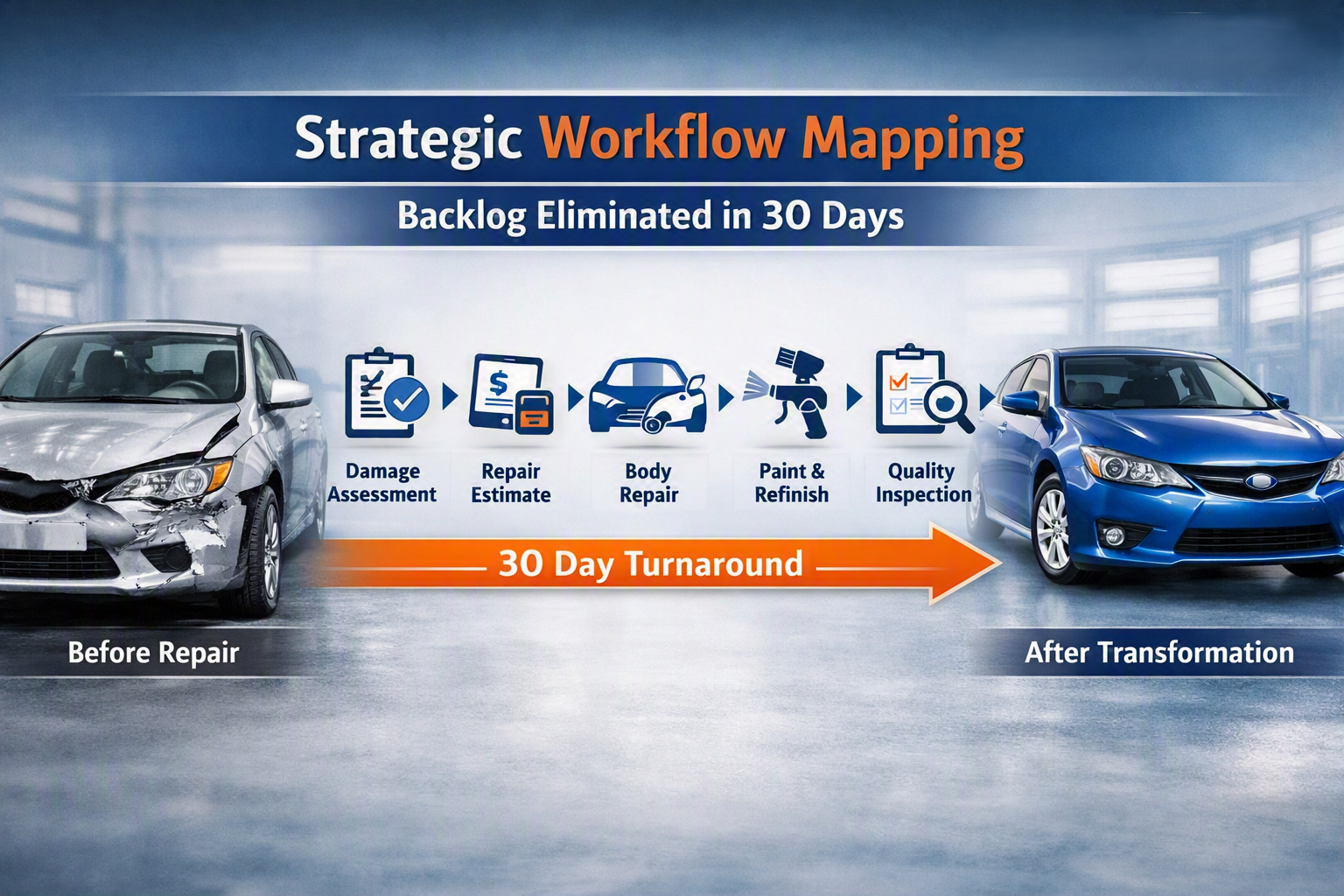
A local automotive body shop was a victim of its own demand. Vehicles were lining up around the block, creating massive wait times: 3 weeks for a standard paint job and 4 months for major body repairs.
The shop was losing revenue and risking customer loyalty because vehicles simply were not moving through the shop floor efficiently. The owners knew they had a bottleneck but could not pinpoint exactly how to untangle it without halting operations.
The Discovery: What the Value Stream Map Revealed
I spent three weeks embedded on the shop floor. I interviewed the scheduler, the painter, the body technicians, and the front-desk booking coordinator to understand the operational reality.
Next, I brought these four core stakeholders together to visually map out the exact path of a vehicle from booking to pickup across four distinct job categories. When the team looked at the completed Value Stream Map, the systemic bottlenecks became instantly clear:
The Approach: Simple, Tactical, and Low-Cost Interventions
Fixing these issues did not require rocket science or massive capital investments. It required an understanding of flow, layout, and capacity matching:
The Results: Clearing the Backlog in 4 Weeks
By systematically eliminating waste and synchronizing the capacity of the body shop to the paint booth, the results were near-instantaneous:
Key Takeaway
“Transforming an operation isn’t always about expensive automation or high-tech software. Often, it just takes stepping back, studying the actual business, and mapping the value stream alongside the people who do the work every day.”

Project Overview
The Challenge: Production Bottlenecks & Delayed Orders
A leading manufacturer of large-scale custom commercial signage was facing operational delays. Because every order was bespoke, production timelines were unpredictable, and custom orders were taking far too long to complete. This slowed down overall throughput and threatened customer satisfaction. The company needed a structured way to look at their process, identify hidden waste, and get orders out the door faster.
The Approach: Collaborative Value Stream Mapping
Instead of imposing top-down changes, I worked directly with the frontline production team to build an improvement strategy from the ground up:
The Results: 30% Faster Delivery & A Lean Culture
The impact of the operational transformation was immediate and measurable:
Client Testimonial / Takeaway
“By mapping our value stream and empowering our shop-floor team, we didn’t just fix a temporary bottleneck—we transformed how our team looks at production efficiency every single day.”

Background
A mid-sized IT organization was responsible for developing and maintaining business-critical software applications. For years, the team relied on a traditional project management approach, where requirements were gathered upfront, development was executed in silos, and testing occurred near the project’s completion.
While this methodology had worked for smaller projects, it became increasingly ineffective as software complexity and customer expectations grew.
Challenge
The IT team faced several recurring issues in their software development projects:
Projects often took many months before delivering any usable functionality to stakeholders. Business users had limited visibility into progress and had to wait until the end of the project to evaluate the product.
Since testing was mostly performed toward the end of the development lifecycle, critical defects and integration issues surfaced during final stages. Fixing these issues required significant rework, resulting in delays and increased costs.
The team did not have a structured approach for identifying and managing project risks. Technical, operational, and business risks were often overlooked until they became major obstacles.
Requirements were documented in lengthy specification documents rather than user-focused requirements. Developers often lacked a clear understanding of business value, leading to functionality that did not fully meet user needs.
Business stakeholders, developers, testers, and project managers worked independently with minimal communication. Feedback loops were slow, creating misunderstandings and misaligned expectations.
By the time software was delivered, business requirements had often changed. Users felt disconnected from the development process and were dissatisfied with the final product.
Solution
To address these challenges, the organization adopted Agile project management practices centered around Scrum.
Key Initiatives
Introduction of User Stories
Requirements were rewritten as user stories, focusing on business value and customer needs.
Example:
“As a Customer Service Agent, I want to search customer records quickly so that I can resolve customer inquiries more efficiently.”
This provided better clarity for both business stakeholders and developers.
Incremental Delivery Through Sprints
Large projects were divided into two-week sprint cycles. Each sprint delivered working software that could be reviewed by stakeholders.
Risk Management Framework
Risk identification and assessment became a standard part of sprint planning and project governance. Risks were documented, monitored, and mitigated throughout the project lifecycle.
Increased Collaboration
Cross-functional teams were established, including:
Daily stand-ups, sprint reviews, and retrospectives improved communication and transparency.
Continuous Testing
Testing activities were integrated throughout development rather than being postponed until the end. This enabled earlier defect detection and faster issue resolution.
Implementation
The transition was executed over a six-month period:
Results
Following the Agile transformation, the organization achieved significant improvements:
Metric | Before | After |
Average Release Cycle | 12 Months | 8 Weeks |
Defects Found After Release | High | Reduced by 60% |
Stakeholder Engagement | Low | High |
Requirement Changes Managed | Difficult | Easily Accommodated |
Team Collaboration | Siloed | Cross-Functional |
Customer Satisfaction | Moderate | Significantly Improved |
Business Benefits
Conclusion
The organization’s reliance on traditional project management practices resulted in slow delivery, late defect discovery, poor collaboration, and limited responsiveness to changing business needs. By adopting Agile methodologies, implementing user stories, introducing risk management processes, and fostering collaboration across teams, the organization significantly improved software quality, delivery speed, and stakeholder satisfaction.
This transformation demonstrated that Agile practices can effectively address the limitations of traditional software development approaches while enabling organizations to deliver value faster and more consistently.
Restoring Financial Accuracy and Confidence in a $10 Million Manufacturing Business
A privately owned manufacturing company with annual revenues exceeding $10 million was experiencing significant financial management challenges. Despite continued sales growth, the leadership team lacked confidence in the financial information being presented each month. Critical business decisions were being made using inaccurate data, creating substantial operational and financial risk.
The Challenge
The company’s accounting function had deteriorated to the point where financial reporting could no longer be relied upon.
Key issues included:
The result was a business operating without reliable financial visibility, exposing ownership to risks related to profitability, cash flow, compliance, and strategic planning.
Our Approach
An Accounting Advisor was engaged to conduct a comprehensive review of the company’s accounting operations and rebuild the finance function from the ground up. With assistance from a junior member of his team he proceeded as follows;
Phase 1: Accounting Assessment
The engagement began with a detailed inventory and review of all accounting records, processes, and reporting practices.
This assessment focused on:
The review identified numerous process gaps, control weaknesses, and reporting errors that had accumulated over several years.
Phase 2: Corrective Action Plan
Following the assessment, a structured remediation plan was implemented.
Major initiatives included:
Rebuilding Balance Sheet Integrity
Every significant balance sheet account was reviewed, reconciled, and validated.
The Accounting Advisor worked closely with the accounting team to:
Team members were trained on how to test and confirm the accuracy of the balance sheet rather than simply relying on accounting software outputs.
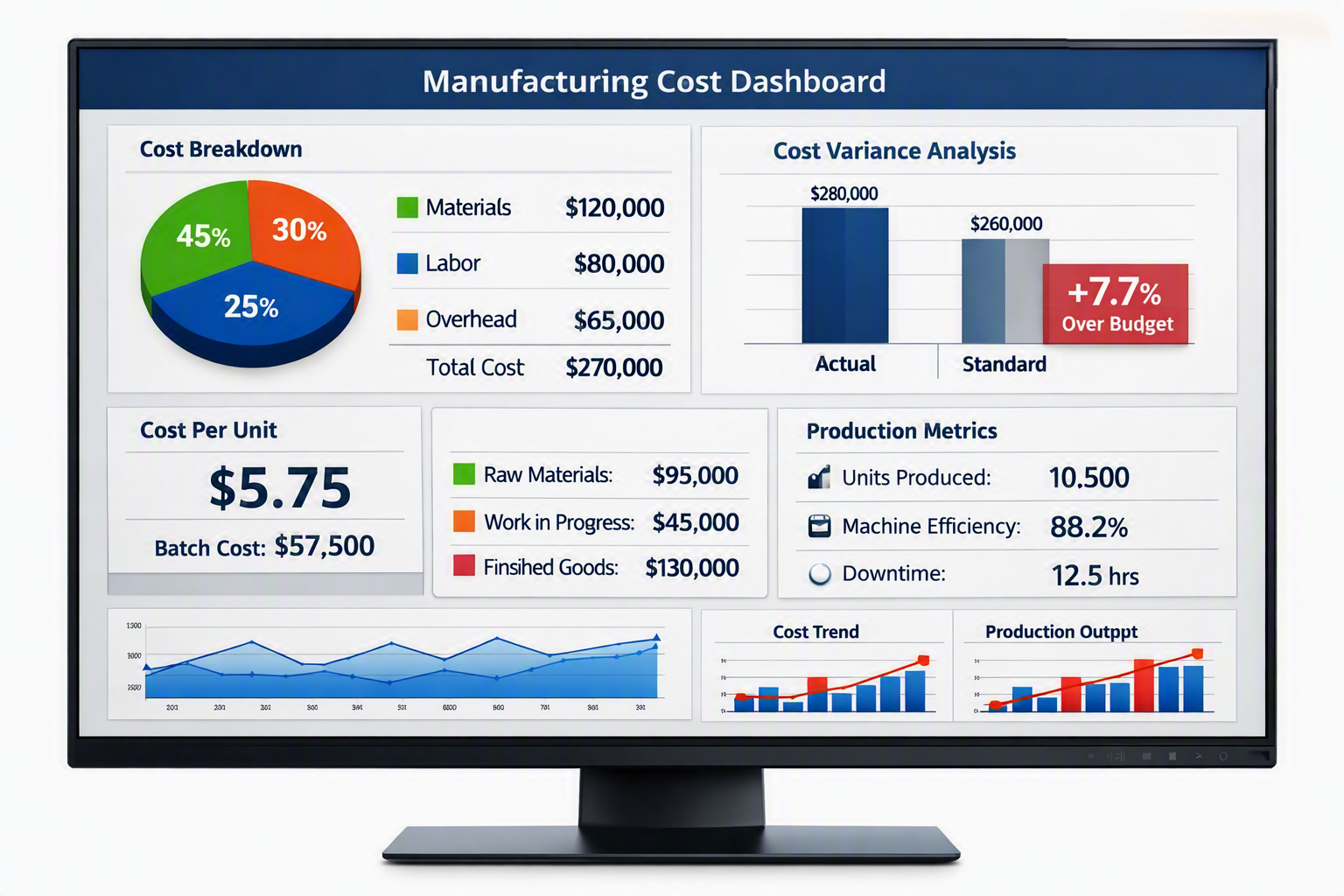
Establishing Proper Cost Accounting
The company lacked reliable product costing information, making profitability analysis nearly impossible.
The Accounting Advisor:
This provided management with a clear understanding of true product margins and manufacturing costs.
Recalibrating Pricing Strategy
Because pricing decisions had been heavily influenced by sales volume rather than actual costs, certain products were being sold with little or no profit contribution.
Using the newly established costing model, pricing structures were reviewed and recalibrated to align with actual production costs and profitability targets.
Training and Capability Development
A key objective of the engagement was sustainability.
Rather than simply correcting records, the Accounting Advisor invested significant time in coaching and developing the accounting staff.
Training focused on:
This hands-on approach ensured the team understood not only what needed to be done, but why it mattered.
Results
Within approximately three months, the company achieved a dramatic improvement in financial management and reporting.
Outcomes Included:
Return on Investment for Ownership
The return on investment from this engagement extended far beyond correcting accounting records.
Prior to the project, ownership was operating with incomplete and unreliable financial information, creating significant risks around profitability, cash flow, taxation, and strategic decision-making. Management was unable to accurately determine product margins, balance sheet accuracy, or the true financial performance of the business.
By implementing proper accounting controls, validating balance sheet accounts, establishing accurate cost accounting, and recalibrating pricing models, the company gained immediate visibility into its financial health.
Key areas of ROI included:
Most importantly, ownership gained something that had been missing for years: confidence that the company’s financial statements accurately reflected the performance and position of the business. This allowed leaders to focus on growth and operational improvement rather than questioning the validity of the numbers.
Business Impact
By transforming a disorganized accounting function into a disciplined financial management system, the company gained the visibility needed to make informed business decisions.
Leadership could finally trust the numbers being presented, understand product profitability, manage compliance risks, and confidently plan for future growth.
The engagement not only corrected historical issues but also established the processes, controls, and staff capabilities necessary to maintain financial accuracy long after the project was completed.
Key Takeaway
Reliable financial information is the foundation of sound business decisions. Through a comprehensive accounting assessment, process redesign, staff training, and implementation of proper accounting principles, this $10 million manufacturer transformed its accounting function from a significant business risk into a strategic asset.
Owner Perspective
“The true return was not simply fixing the books. It was gaining the ability to make informed business decisions based on accurate financial information. The engagement transformed accounting from a source of risk and uncertainty into a reliable management tool that supports profitability, growth, and long-term enterprise value.”
Is Your Organization Running Like a Leaking Coffee Cup? Have you ever brewed the perfect cup.
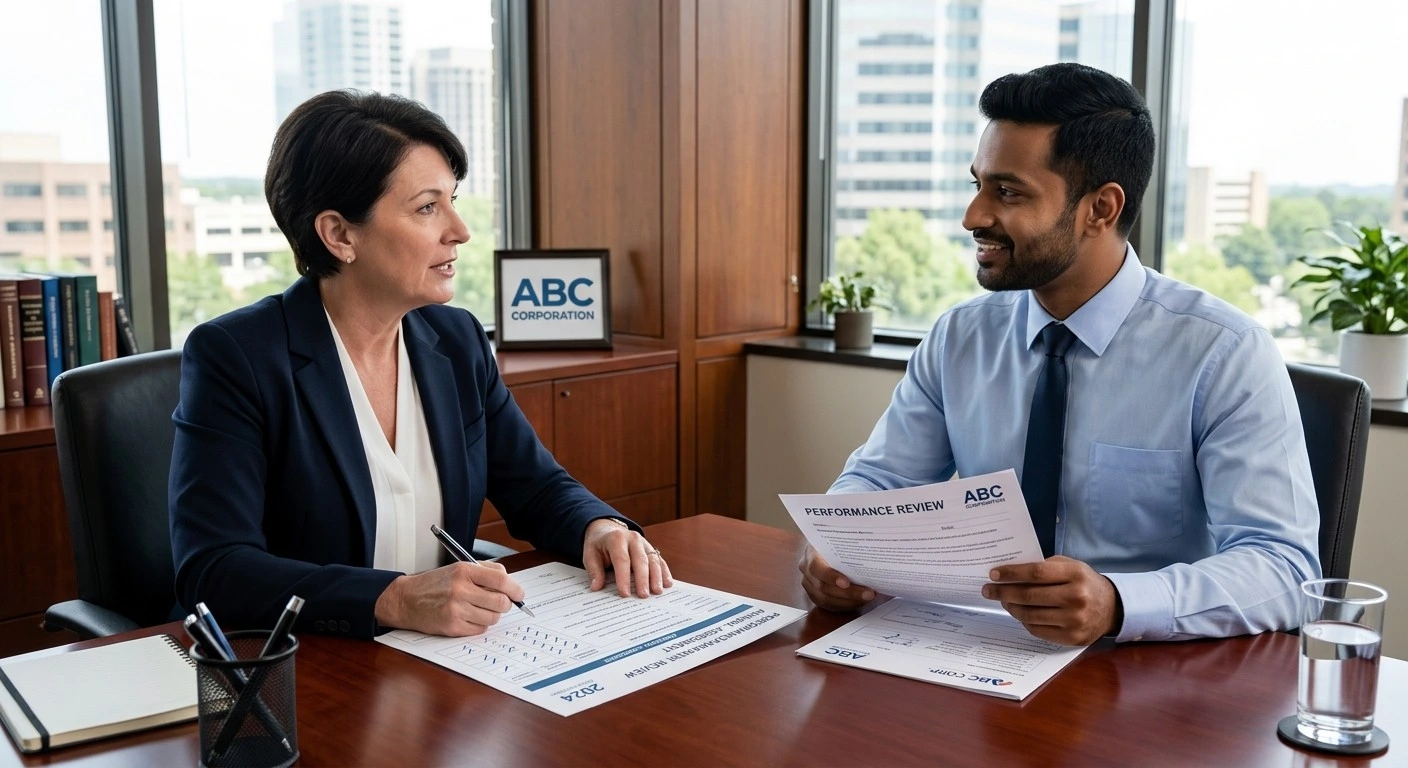
Why Traditional Performance Management Fails Growing Businesses - and How to Transition Cleanly to Cascading OKRs.

Lessons From World Cup Soccer Teams: Organization, Coaching, Errors and the Use of Technology. Every four.

Why Leadership is The Foundation of Organizational Alignment The Importance of Unified Leadership Category: Organizational Transformation.

Building Business Agility Through Operational Excellence What Business Agility Really MeansBusiness agility is the ability to.
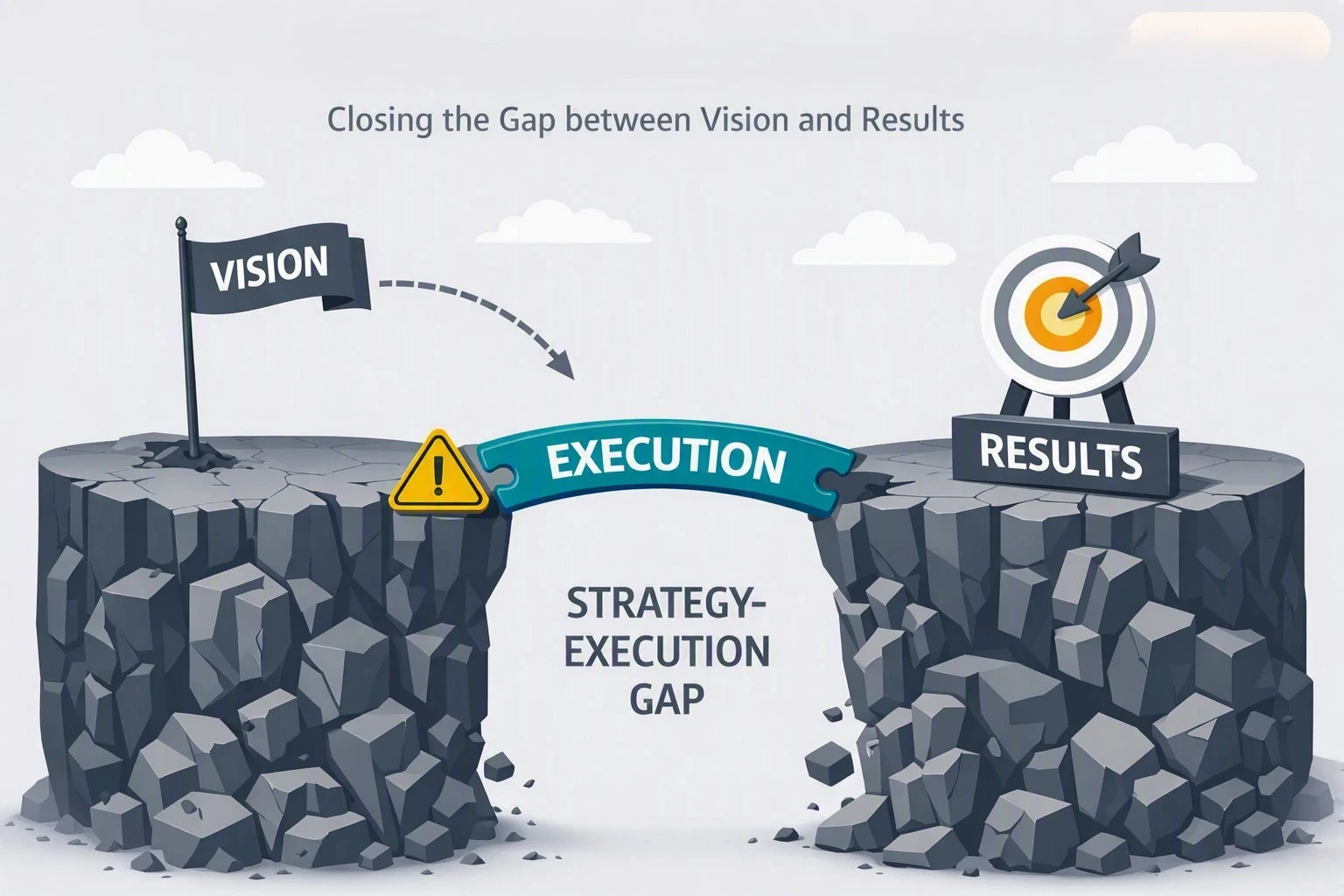
Why Strategy Fails Without Execution: Closing the Gap Between Vision and Results The Hidden Cost of.


Partner with a team that converts operational complexity into strategic performance for stronger, measurable outcomes.